

Cover: AI-generated illustration for inspiration. It does not show the exact products sold. See the recommended product pages below for actual photographs and specifications.
Buying the widest paint brush can look like a quick way to finish a small job. But a narrow edge, an awkward corner and a broad flat panel ask different things of a brush. Before choosing, make a short note of the surfaces you want to paint and the coating you plan to use.
Make a three-part project note
- Broad areas: list the flat faces, such as a small cabinet door.
- Narrow areas: note trim, edges and spaces beside fittings.
- The coating: write down the exact paint, stain or varnish name, rather than just its colour.
Measure the narrowest section and sketch any corners. A quick phone photo of the job and the coating label makes it easier to ask a focused question when comparing brushes.
Compare width without forgetting control
As general guidance, Resene suggests brushes in the 25–63 mm range for trim and joinery, and notes that larger brushes can be more tiring to use. It also distinguishes flat, oval and specialist cutting-in brushes: width alone does not determine how well a brush suits an edge. See Resene's paintbrush selection guide for the full advice.
For a simple size comparison, Save2Door lists a FINDER flat brush in 1 inch / 2.5 cm and a 2 inch / 5 cm version. Each listing is for one brush in the named size. Compare that width with your project note rather than judging size from a photograph.
You can cut two paper strips to the listed widths and hold them against the area you plan to paint. This helps visualise the size difference, although it does not test bristle flexibility or the quality of a finish.
Check shape and paint compatibility separately
A flat head and a tapered cutting-in edge are different features. Check the head shape in the description and actual-stock photos before ordering for a detailed edge.
Resene's guide also explains that bristle material matters when matching a brush to a coating. The two FINDER listings above identify a flat head and a black-and-orange grip, but do not confirm the bristle material or compatibility with a particular paint. Check the packaging or ask for those details before assuming a match.
A short checklist before buying
- Have you noted both broad faces and narrow edges?
- Does the listed width suit the space you need to reach?
- Is the head shape appropriate for the edge or detail?
- Have you confirmed suitability for your exact coating?
- Are you selecting the intended size, rather than another brush shown in a range photograph?
Browse the Tools & DIY collection with your project note beside you. Start with the brush requirements for this job, then check what you already own before adding another size.
Recommended products
Explore these options from Save2Door. Products are sold separately; check each product page for current prices, availability and the selected option.
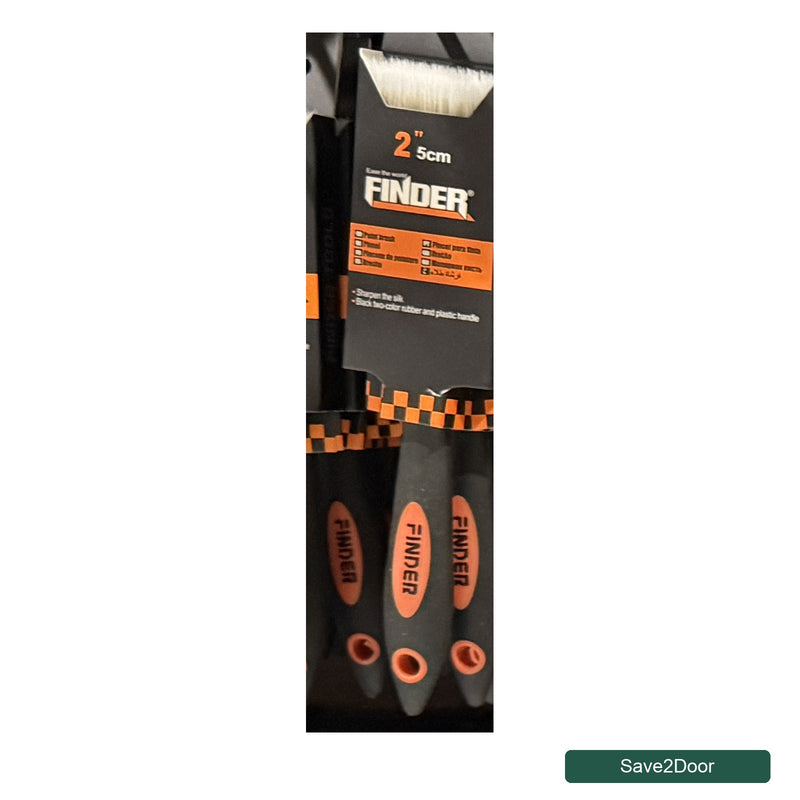
Actual product photograph.
FINDER Soft-Grip Flat Paint Brush - 2 inch / 5 cm
The 2 inch / 5 cm flat-brush option. Confirm bristle suitability against your paint manufacturer’s guidance.